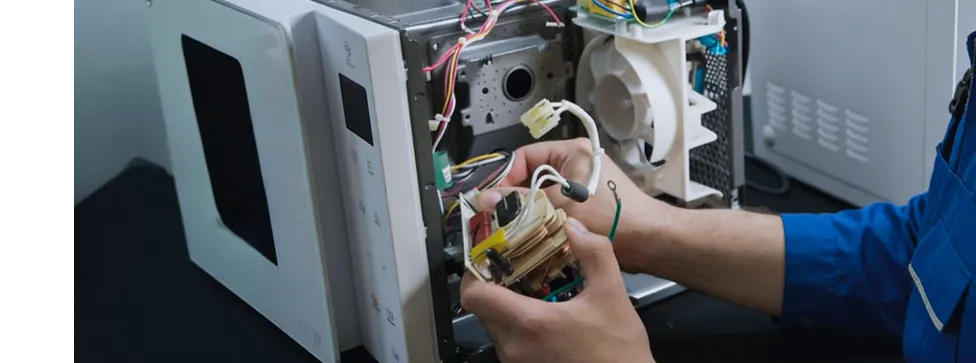
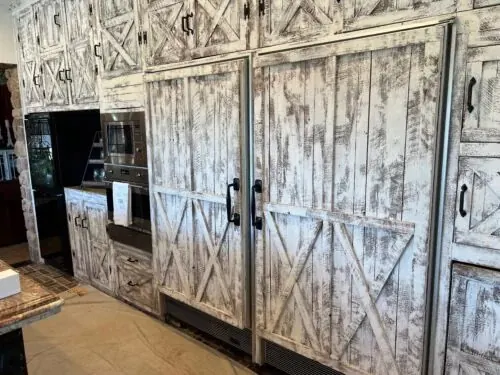
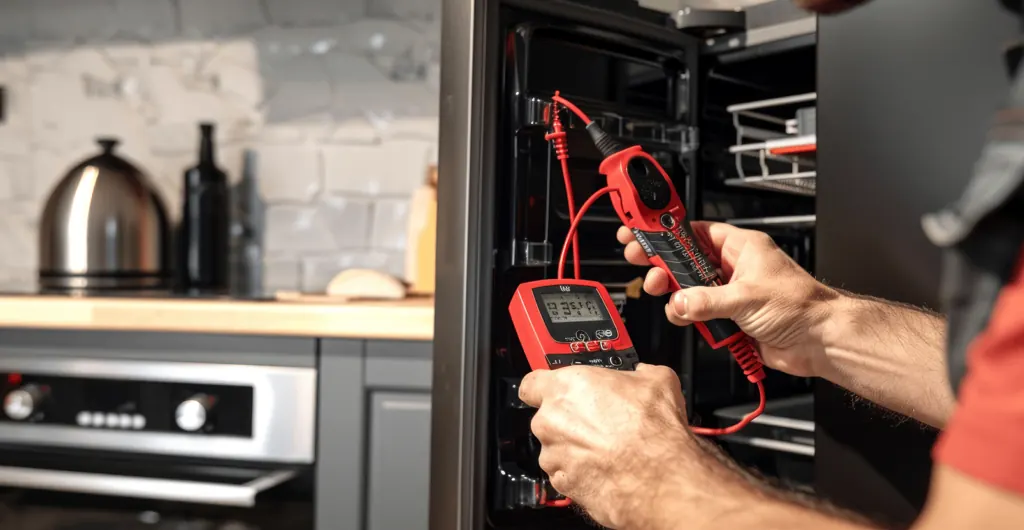
If a microwave runs but doesn't heat, test it with a cup of water for one minute, make sure the door closes firmly and the outlet and breaker are fine. The usual causes inside — magnetron, high-voltage diode or capacitor, door switches — are not owner repairs: the capacitor can hold a dangerous charge even when unplugged. Built-in, drawer and over-the-range microwaves are usually worth repairing.
5 checks you can do safely
- Do the water test. Heat a cup of water for one minute on high. Cold water confirms a heating fault.
- Check the door. A door that doesn't latch firmly won't let the microwave heat; look for food on the latch.
- Check power. Reset the breaker or GFCI. A totally dead microwave often has a blown fuse caused by a failed door switch.
- Stop if it sparks. Arcing usually means a burned waveguide cover or metal inside. Stop using it.
- Drawer won't open. Clear the track and reset the breaker; a stuck drawer usually needs the drawer motor or gears.
When to call a technician
- It runs but doesn't heat (high-voltage components).
- It's completely dead after a breaker reset.
- It sparks or the interior is damaged.
Stay safe
Unplug the appliance (or switch off its breaker) before touching anything inside it, and never open a sealed refrigeration system, a gas valve or a microwave. If a code points to a part, the part has to be tested before it is replaced; we do that on the $75 diagnostic visit, credited toward the repair.
Frequently asked questions
Is it safe to repair a microwave myself?
Not inside. The high-voltage capacitor can stay charged after unplugging.
Is a microwave drawer worth repairing?
Usually yes — replacements are expensive and fitted to the cabinet.
Browse all repair guides by appliance
Still not working?
Call (702) 744-2944 or book online. The in-home diagnostic is $75 and is credited toward the repair. We serve the whole Las Vegas Valley.