

Polin Rotating Rack Oven Repair in Las Vegas: Not Holding Temperature, Flame Sensor Replacement and Burner Service
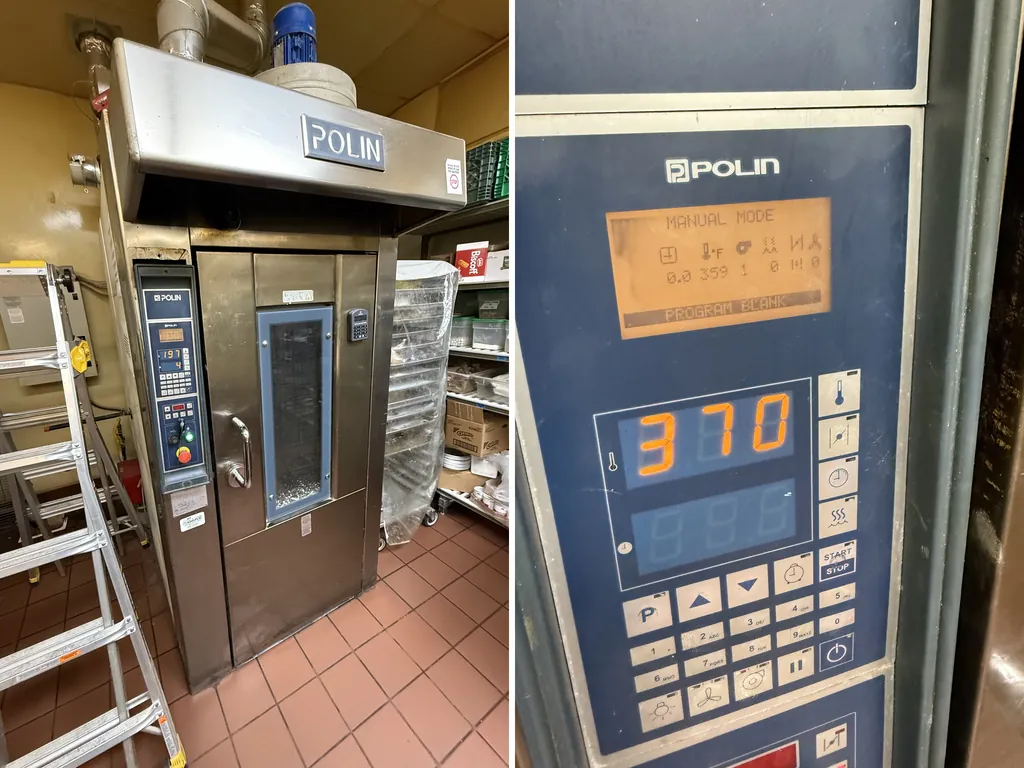
A Polin rotating rack convection oven in a Las Vegas bakery would not hold its set temperature: it heated, dropped off and recovered slowly, ruining bake times. We removed and cleaned the gas burner with its flame sensor, igniter electrode and gas orifice, and testing showed the flame sensor was sending an unstable signal that made the burner control shut off the gas from time to time. We replaced the flame sensor, cleaned the draft inducer, the exhaust blower and the barometric draft control, and the oven now holds temperature through full bakes.
| Equipment | Polin rotating rack convection oven (gas) |
|---|---|
| Location | Las Vegas, NV |
| Symptom | Oven not holding set temperature; burner dropping out during bakes |
| Root cause | Intermittent flame sensor signal shutting off the gas valve; heavy flour and dust in the burner, draft inducer and exhaust blower |
| Repair | Burner removed and cleaned (flame sensor, igniter electrode, orifice); flame sensor replaced; draft inducer, exhaust blower and draft control cleaned |
| Result | Stable temperature through full bake cycles |
The call: a rack oven that won't hold temperature
For a bakery, a rotating rack oven is the heart of the operation: full racks of bread, rolls and pastries go in, the rack rotates for even color, and the bake has to finish on time at the right temperature. This Polin rotating rack oven had started losing temperature in the middle of bakes. It would climb to the setpoint, fall off, and take too long to recover, so products came out pale or unevenly baked.
Burner service: flame sensor, igniter electrode and orifice
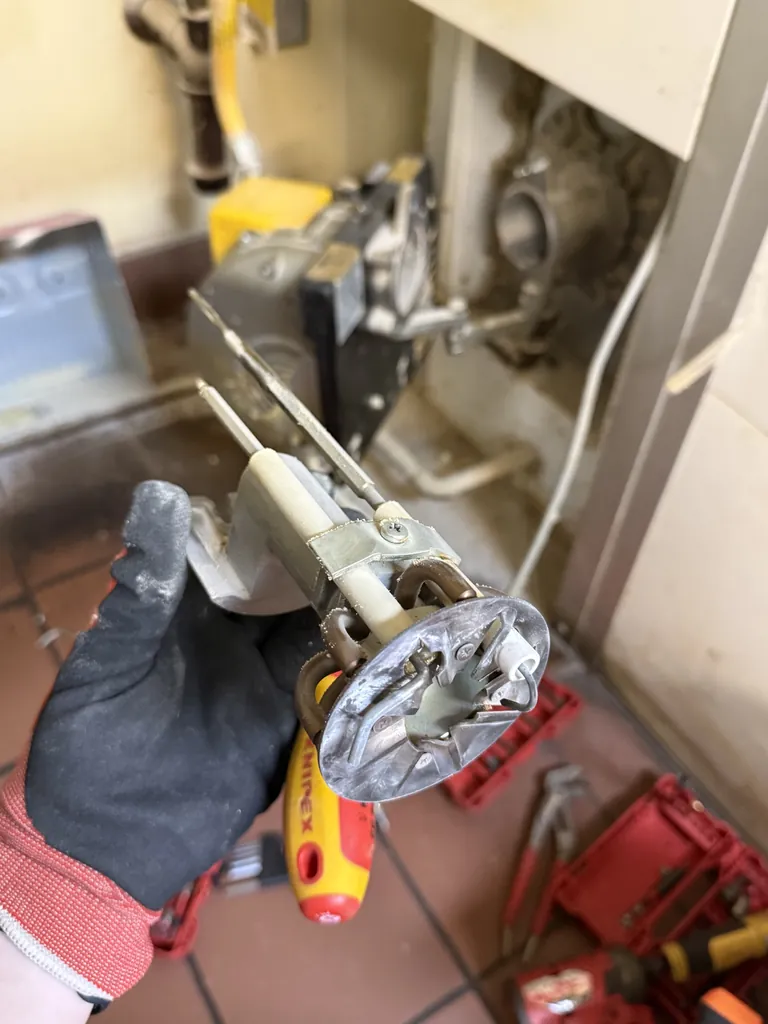
A gas rack oven heats with a power burner. On every call for heat, the control opens the gas valve, the igniter electrode lights the flame, and the flame sensor (flame rod) proves the flame by carrying a tiny current through it. If that signal drops, the control assumes the flame is gone and closes the gas valve for safety.
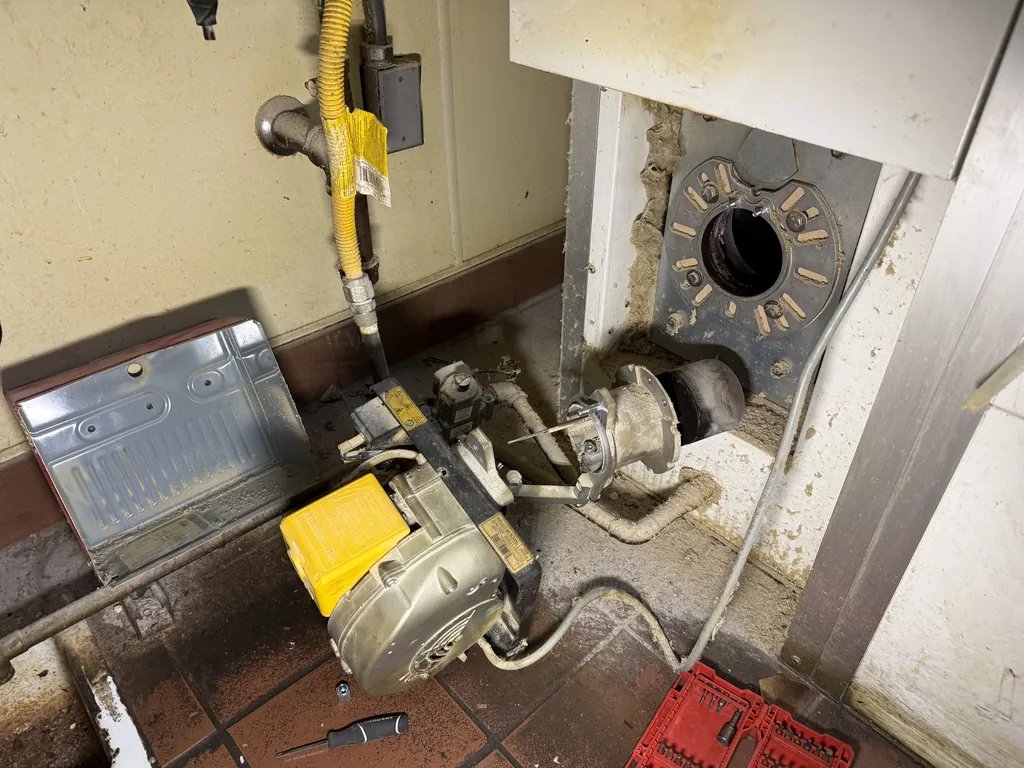
We removed the complete burner assembly and pulled out the flame sensor, the igniter electrode and the gas orifice for cleaning and inspection. Flour dust and baked-on residue had built up on every part. After cleaning, testing showed the flame sensor's signal was still unstable — it dropped out intermittently, and each dropout made the burner control shut off the gas. That was the reason the oven kept losing temperature. We replaced the flame sensor and set the electrode gaps.
Draft inducer, exhaust blower and draft control
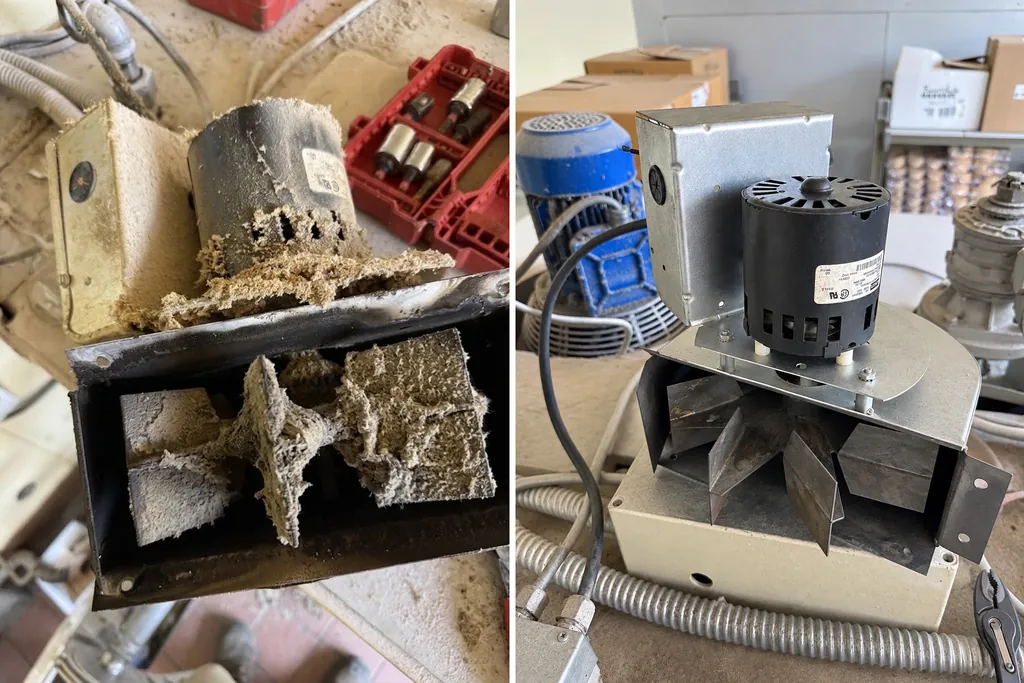
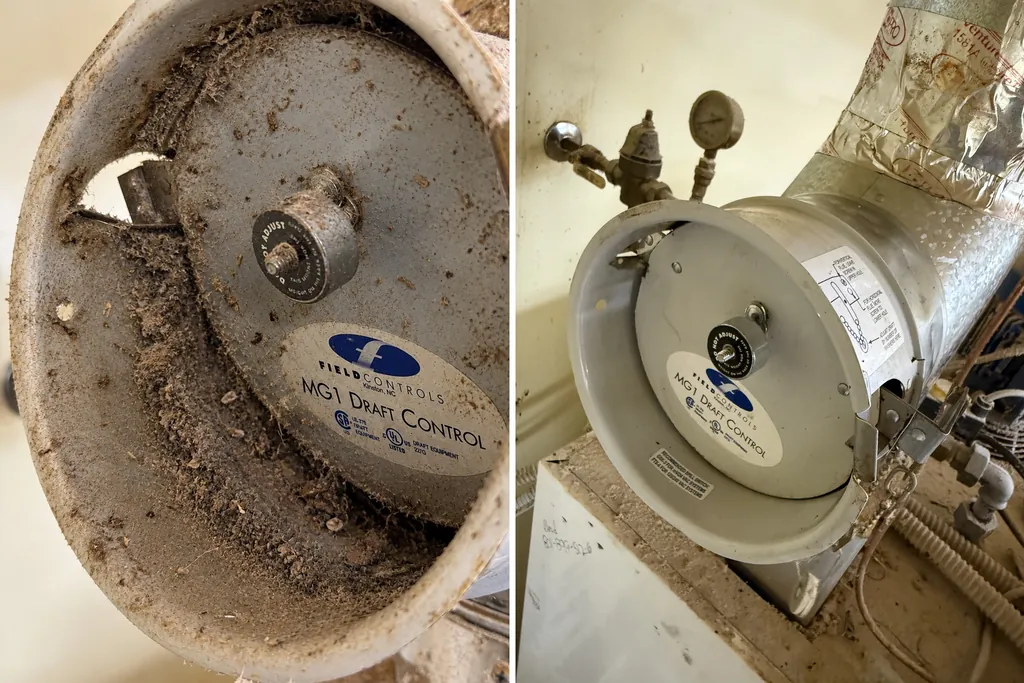
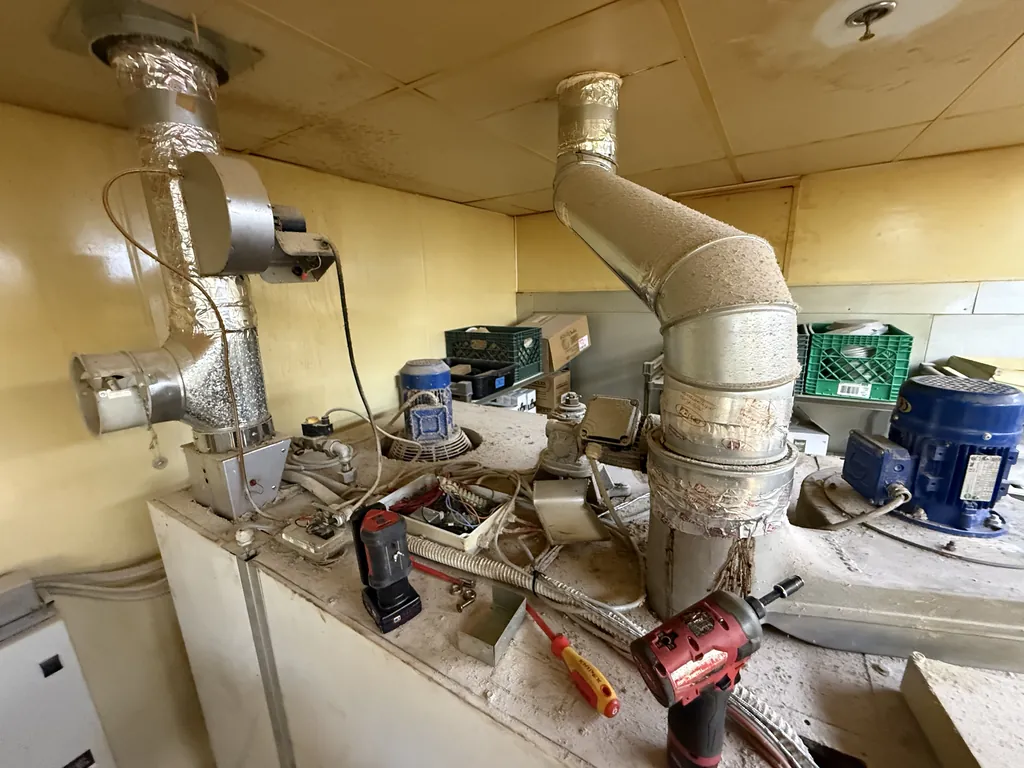
A burner can only burn properly if the combustion gases leave the oven freely. In a bakery, flour hangs in the air and works its way into every fan. The exhaust blower wheel was packed with a thick felt of flour and dust, and the barometric draft control on the flue was coated with it. A restricted exhaust reduces draft, upsets combustion and can trip the safety controls. We disassembled and cleaned the draft inducer, the exhaust blower motor and wheel, and the draft control, and checked that the damper moves freely.
Testing and result
With everything reassembled we ran the oven through heat-up and full bake cycles, watching the flame signal, the burner cycling and the actual temperature against the setpoint. The burner lit every time, the flame signal stayed steady and the oven held its temperature. The bakery went back to normal production the same day.
Rack oven maintenance for bakeries
- Have the burner, flame sensor and igniter cleaned and checked at least once a year — twice in a high-volume bakery.
- Clean the exhaust blower, draft inducer and combustion air openings regularly; flour dust builds up faster than people expect.
- If the oven struggles to hold temperature, shows ignition or flame faults, or takes longer to recover after loading, call before it stops completely.
- Keep the rack lift and rotation mechanism clean and lubricated as the manufacturer specifies.
We service gas convection, rack, deck and revolving ovens, fryers, combi ovens and other restaurant cooking equipment across the Las Vegas valley. A standard commercial service call is $100.
Frequently asked questions
Why won't my rack oven hold temperature?
Common causes are a weak or intermittent flame sensor, dirty burner parts, restricted exhaust or combustion airflow, or a failing temperature probe or control. On this Polin it was the flame sensor.
What does a flame sensor do in a commercial oven?
It proves the burner flame. If its signal drops, the burner control shuts off the gas for safety, so an intermittent sensor makes the oven lose heat.
How often should a bakery oven burner be serviced?
At least once a year, and twice a year in high-volume bakeries where flour dust builds up quickly.
Do you repair Polin ovens in Las Vegas?
Yes. We repair Polin and other rotating rack, deck and revolving bakery ovens in Las Vegas, Henderson, North Las Vegas and Boulder City.
Need this repair?
Bakery oven losing temperature or failing to light? Call (702) 744-2944 — standard commercial call $100.