

Douglas Commercial Dishwasher Repair in Las Vegas: No Rinse Heat, Stuck Contactor and a Worn Control Panel
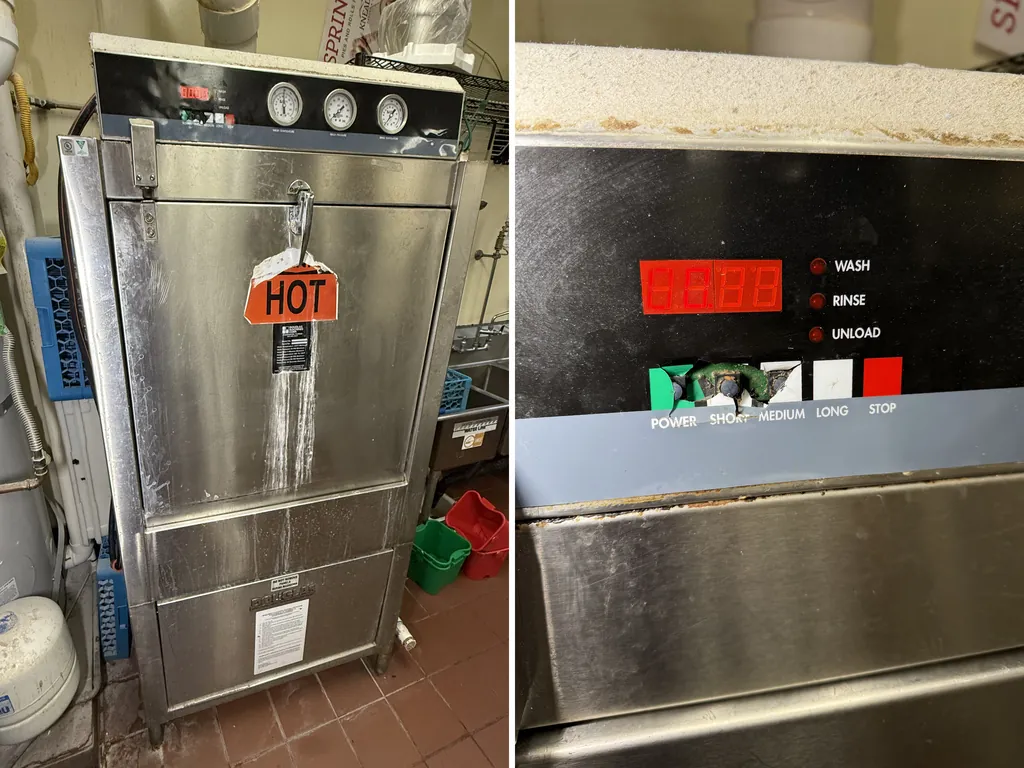
A Las Vegas restaurant's Douglas commercial dishwasher stopped heating during the rinse cycle, and its user control panel was worn through with holes that could let water and steam reach the electronics. On the first visit we found the cause: a stuck contactor in the rinse heater circuit, which had also blown two slow-blow fuses. Three days later we returned with the parts, locked out the power and replaced the contactor, both fuses and the control panel. The rinse is back at sanitizing temperature — at least 180°F — and the controls are sealed again.
| Equipment | Douglas commercial dishwasher (high-temperature, electric heat) |
|---|---|
| Location | Las Vegas, NV |
| Symptoms | No heat on the rinse cycle; worn user panel with holes over the electronics |
| Root cause | Stuck contactor in the rinse heater circuit; two slow-blow fuses blown as a result |
| Repair | Contactor and both fuses replaced under lockout/tagout; new control panel installed |
| Visits | Diagnosed on the first visit, repaired 3 days later with the parts |
| Result | Final rinse back at 180°F+; controls sealed against water and steam |
The call: the dishwasher stopped sanitizing
A Las Vegas restaurant called us because its Douglas commercial dishwasher had stopped heating during the rinse cycle. In a high-temperature dish machine, the hot final rinse is what sanitizes the dishes, so a machine that washes but doesn't heat the rinse is a food-safety problem, not just an inconvenience. The staff had also noticed that the user control panel was worn through: there were holes in the overlay right above the buttons, an open path for water and steam to the electronics and a real risk of a short circuit.
What temperature should the final rinse be?
For high-temperature commercial dishwashers, the FDA Food Code and NSF standards call for a final sanitizing rinse of at least 180°F at the rinse manifold for most machine types (165°F for stationary-rack single-temperature machines), and generally no hotter than 194°F, so that dish surfaces reach 160°F. Wash water typically runs around 150–165°F depending on the machine. Below those numbers dishes come out "clean" but not sanitized, which is exactly what health inspectors check with temperature strips.
Diagnosis: a stuck contactor and two blown fuses
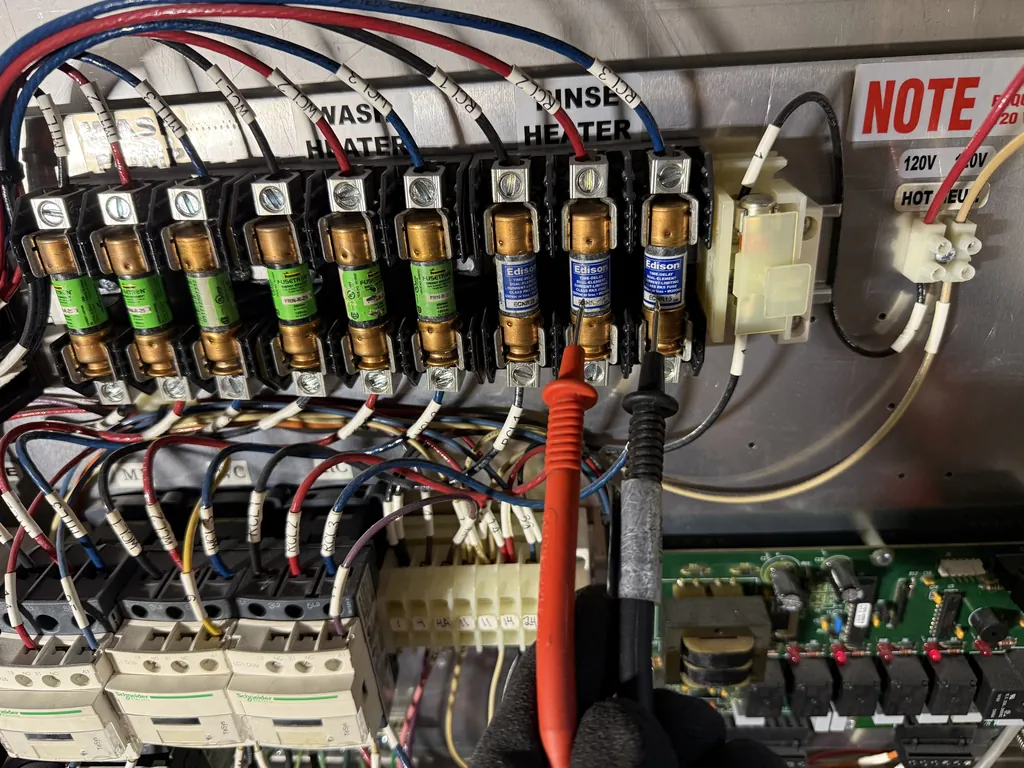
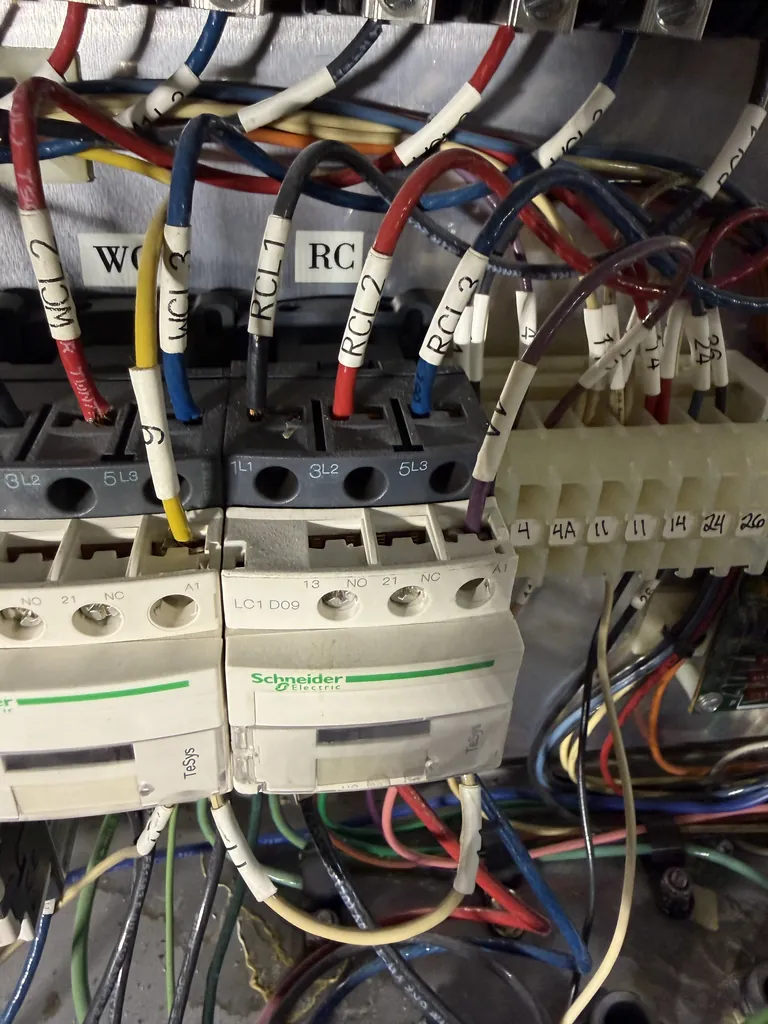
The rinse heater is switched by a contactor, a heavy-duty relay that connects the heating element to power when the control calls for heat. We locked out the machine, opened the electrical compartment and tested the rinse heater circuit. The contactor's contacts had stuck, and the resulting fault had blown two slow-blow (time-delay) fuses that protect the heater supply. With the fuses open, the element got no power at all. We identified the failed parts on the first visit, ordered them and scheduled the repair.
The repair, done safely
Three days later we were back with the parts. Commercial dishwashers run on high-voltage power with water all around, so safety comes first:
- Lockout/tagout: power disconnected and locked at the breaker, absence of voltage verified with a meter.
- Contactor: replaced the stuck contactor in the rinse heater circuit and checked every terminal for heat damage.
- Fuses: replaced both slow-blow fuses with the correct type and rating.
- Heater check: measured the rinse heating element's resistance and insulation to make sure it wasn't the root cause.
- Control panel: installed a new user control panel so water and steam can no longer reach the electronics behind it.
- Test: ran full cycles and confirmed rinse temperature on the gauge and with thermo-labels at the dish surface.
Result
The rinse heats to sanitizing temperature again, every cycle. The new control panel is sealed, so the restaurant no longer risks a short circuit from water or steam getting into the controls, and the dish room is back in compliance.
Signs your dish machine needs service
- Rinse or wash gauges reading below spec, or temperature strips that don't change color.
- Dishes coming out cloudy, spotted or not drying properly.
- Breakers or fuses tripping, burnt smells or buzzing from the electrical compartment.
- Cracked, worn or peeling control overlays — they let moisture into the electronics.
Before you call, our dish machine not reaching 180°F checklist covers what staff can safely check. A standard commercial service call is $100; an emergency call puts a technician on site within 2 hours for $300.
Frequently asked questions
Why is my commercial dishwasher not heating the rinse?
Common causes are a failed rinse heating element, a stuck or burned contactor, blown fuses, a failed thermostat or a low-water safety. On this Douglas machine a stuck contactor had blown two fuses.
What temperature should a commercial dishwasher final rinse be?
For most high-temperature machines, at least 180°F at the rinse manifold (165°F for stationary-rack single-temperature machines) so dish surfaces reach 160°F.
Can a worn dishwasher control panel cause problems?
Yes. Holes or cracks let water and steam reach the electronics and can cause a short circuit. Replace the panel before it fails.
How much is a commercial service call?
A standard commercial call is $100. An emergency call with a technician on site within 2 hours is $300. Repairs are quoted in writing before work starts.
Need this repair?
Dish machine not reaching 180°F? Call (702) 744-2944 — standard commercial call $100.